
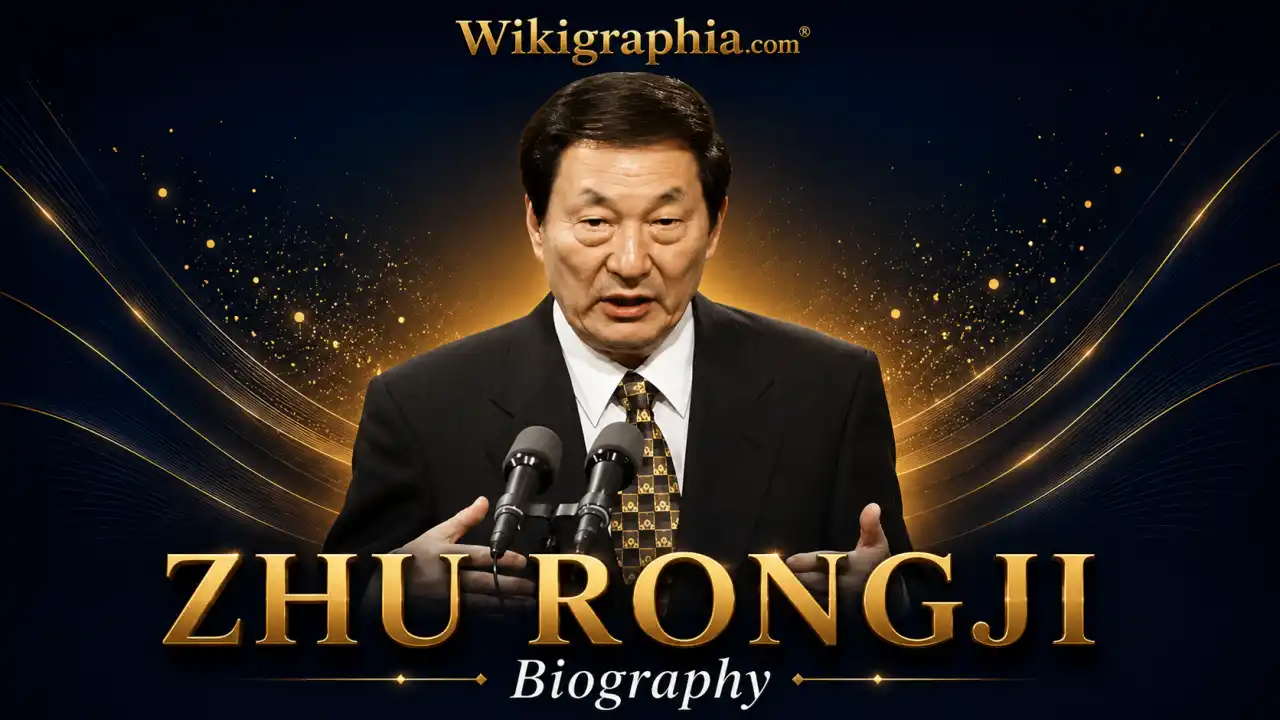
Zhu Rongji was a Chinese politician and trained electrical engineer who served as the Premier of the People’s Republic of China from 1998 to 2003, and who is widely regarded as one of the principal architects of the country’s dramatic economic transformation. A sharp-tongued, determined technocrat, he drove sweeping and often painful reforms of China’s state-owned industries and financial system, tackled corruption and inflation, and led the negotiations that brought China into the World Trade Organization. His policies helped fuel decades of explosive economic growth, and he remained an influential, if at times contested, figure long after leaving office. He died on 12 August 2026 at the age of 97.
Zhu Rongji Biography, Wiki
| Field | Details |
| Full Name | Zhu Rongji |
| Date of Birth | 23 October 1928 |
| Date of Death | 12 August 2026 (aged 97) |
| Birthplace | Changsha, Hunan province, China |
| Place of Death | Beijing, China |
| Nationality | Chinese |
| Zodiac Sign | Scorpio |
| Profession | Politician, engineer |
| Former Office | Premier of the People’s Republic of China (1998 to 2003) |
| Party | Chinese Communist Party (joined 1949) |
| Earlier Role | Mayor of Shanghai; Vice Premier |
| Education | Tsinghua University (electrical engineering) |
| Known For | Driving China’s economic reforms and WTO entry |
| Wife | Lao An |
| Nicknames | “Boss” and “Madman Zhu” |
Zhu Rongji Details
| Area | Detail |
| Training | Electrical engineer, educated at Tsinghua University |
| Early setback | Purged and sent to do manual labour for years |
| Shanghai | Served as mayor and party chief in the late 1980s |
| National rise | Became a vice premier and then premier |
| Signature reforms | Overhauled state industry, finance and taxation |
| Landmark | Led China’s entry into the World Trade Organization |
Zhu Rongji Events
| Year | Event |
| 23 October 1928 | Born in Changsha, Hunan province |
| 1949 | Joined the Chinese Communist Party |
| 1950s | Trained and worked as an engineer, then was purged |
| 1987 to 1991 | Served as mayor and party chief of Shanghai |
| 1991 | Became a vice premier of China |
| 1998 | Became Premier of China |
| 2001 | Oversaw China’s entry into the WTO |
| 12 August 2026 | Died in Beijing at the age of 97 |
Zhu Rongji Early Life and Education
Zhu Rongji was born on 23 October 1928 in Changsha, in Hunan province, and was orphaned at a young age. A gifted student, he went on to study electrical engineering at the prestigious Tsinghua University in Beijing, one of China’s foremost institutions, and he joined the Chinese Communist Party in 1949, around the time of the founding of the People’s Republic. His training as an engineer shaped his precise, technocratic and results-oriented approach to governance throughout his career.

Zhu Rongji’s Early Career and Political Setbacks
Zhu Rongji began his career working in economic planning, but like many others he suffered during the political turmoil of the Maoist era. He was labelled a “rightist” and purged in the late 1950s, reportedly for expressing support for reform, and spent years in political disgrace, including periods of doing manual labour. He was eventually rehabilitated, and from the late 1970s his career recovered as China began to open up, allowing his considerable talents in economic management to come to the fore.
Zhu Rongji Political Rise
Zhu Rongji in Shanghai
Zhu Rongji made his name as the mayor and later Communist Party chief of Shanghai in the late 1980s, where he earned a reputation as an effective, no-nonsense administrator committed to economic development and to cutting through bureaucracy. His success in reviving and opening up China’s largest city marked him out as a rising star and brought him to the attention of the country’s top leadership.
Zhu Rongji as Vice Premier
Zhu Rongji was elevated to the national stage in 1991, becoming a vice premier with responsibility for the economy. In that role he took decisive action to bring soaring inflation under control and to stabilise the overheating economy in the mid-1990s, cementing his reputation as a tough and capable economic manager and positioning him as the natural choice to lead the government’s economic agenda.
Zhu Rongji as Premier of China
Zhu Rongji became Premier of China in 1998, the country’s top economic post, serving under President Jiang Zemin until 2003. As premier he pursued an ambitious and often wrenching programme of reform. He forced sweeping restructuring of inefficient state-owned enterprises, a process that improved competitiveness but also resulted in millions of layoffs, and he overhauled the country’s taxation, banking and financial systems. He was known for his blunt style, his impatience with incompetence and corruption, and his willingness to accept responsibility when the government fell short, which made him a popular figure with much of the public. Among his most consequential achievements was leading the long and difficult negotiations that secured China’s entry into the World Trade Organization in 2001, a landmark that opened the country far more fully to global trade. He also helped steer China through the Asian financial crisis of 1997 and 1998 and played a role in the smooth handover of Hong Kong.
Zhu Rongji’s Legacy
Zhu Rongji left a profound and lasting, though debated, legacy. His reforms are widely credited with unleashing China’s enormous economic potential, helping to drive the sustained high growth that propelled the country to become the world’s second-largest economy, and modernising its financial and industrial foundations. At the same time, his legacy remains contested within China, with critics pointing to the social costs of mass layoffs and to longer-term vulnerabilities created by the rapid changes. Remembered as a determined, incorruptible and formidable reformer, he stands as one of the most influential figures in China’s modern economic history. This profile presents his record and the debates around it factually and neutrally.
Zhu Rongji Personal Life
Zhu Rongji was married to Lao An, and the couple had children, including a son, Levin Zhu Yunlai, who became a prominent figure in Chinese finance, and a daughter, Zhu Yanlai, who led a charitable organisation supporting schoolchildren that he backed. Known for his personal integrity and his disdain for corruption, he largely withdrew from public life after retiring from the premiership in 2003, living quietly and rarely appearing in public in his later years.
Zhu Rongji’s Character and Reputation
Zhu Rongji was famous for his forceful, outspoken personality, which earned him nicknames such as “Boss” and “Madman Zhu.” He was renowned for his fierce stance against corruption, once declaring, in a widely quoted remark, his readiness to prepare coffins for corrupt officials and, if necessary, for himself. His candour, his willingness to criticise official failings, and his reputation for personal honesty made him an unusually popular and respected figure among ordinary Chinese citizens.
Zhu Rongji Net Worth and Earnings
A reliable, verified figure for Zhu Rongji’s net worth is not a meaningful part of the public record, and this profile does not put forward one. As a lifelong public official known for his personal integrity and opposition to corruption, his life was defined by his government service rather than by personal wealth. His significance lies in his transformative impact on China’s economy rather than in any financial measure.
| Source | Detail |
| Net worth | Not reliably documented |
| Public life | Defined by government service and a reputation for integrity |
Zhu Rongji Social Media
Zhu Rongji belonged to an era of Chinese leadership before the age of personal social media, and his legacy is carried through the historical record, official accounts and extensive international coverage of his life and reforms.
| Platform | Handle | Notes |
| Historical record | Through official and international media | The record of his career |
| Public information | News and historical archives | How his life and legacy are documented |
Zhu Rongji Controversies and Debates
Zhu Rongji’s Contested Reform Legacy
The central debate surrounding Zhu Rongji concerns the mixed consequences of his sweeping economic reforms. Supporters credit him with modernising China’s economy and unleashing decades of growth, while critics point to the significant social costs, including the mass layoffs that accompanied the restructuring of state industry, and to structural vulnerabilities that emerged later. These are matters of legitimate historical and economic debate rather than personal wrongdoing, and the profile presents the differing assessments factually and without taking a side.
Zhu Rongji as a Polarising Figure
Zhu Rongji remained a polarising figure in China, admired by many for his integrity and his transformative reforms, and viewed more critically by others. Such differing views reflect the profound and complex impact he had on the country rather than any established wrongdoing, and the profile notes that his legacy continues to be discussed and debated.

Lesser Known Facts About Zhu Rongji
- He trained as an electrical engineer at Tsinghua University.
- He was purged as a “rightist” and spent years in political disgrace.
- He made his reputation as the mayor of Shanghai.
- He brought soaring inflation under control as vice premier.
- He led the negotiations for China’s entry into the WTO.
- He was known by the nicknames “Boss” and “Madman Zhu.”
- He was celebrated for his fierce opposition to corruption.
Zhu Rongji FAQ
Who was Zhu Rongji?
He was a Chinese politician and trained engineer who served as Premier of China from 1998 to 2003 and is regarded as a key architect of the country’s economic reforms.
When was Zhu Rongji born, and when did he die?
He was born on 23 October 1928 and died on 12 August 2026, at the age of 97.
What was Zhu Rongji best known for?
He was best known for driving sweeping reforms of China’s economy and for leading the country’s entry into the World Trade Organization.
What reforms did Zhu Rongji carry out?
He restructured state-owned enterprises, overhauled the taxation and financial systems, curbed inflation and tackled corruption.
What was Zhu Rongji’s role in China joining the WTO?
He led the difficult negotiations that secured China’s entry into the World Trade Organization in 2001.
Why was Zhu Rongji nicknamed “Madman Zhu”?
The nickname reflected his forceful, outspoken and impatient style and his determination in pushing through reforms.
What was Zhu Rongji’s profession before politics?
He trained and worked as an electrical engineer before rising through economic planning and government.
Is Zhu Rongji’s legacy contested?
Yes, he is credited with driving China’s growth, but his reforms’ social costs and long-term effects remain debated.
Where was Zhu Rongji from?
He was born in Changsha, in Hunan province, China.
What positions did Zhu Rongji hold before becoming premier?
He served as mayor and party chief of Shanghai and as a vice premier of China.
Sources
Associated Press (via US News), Ex-Chinese Premier Zhu Rongji, architect of growth, dies of illness at 97,
https://www.usnews.com/news/world/articles/2026-08-12/ex-chinese-premier-zhu-rongji-architect-of-growth-dies-of-illness-at-98
NBC News, Ex-Chinese Premier Zhu Rongji, architect of growth, dies of illness at 97,
https://www.nbcnews.com/world/china/ex-chinese-premier-zhu-rongji-architect-growth-dies-illness-97-rcna592075
South China Morning Post, Zhu Rongji, China’s chief engineer of economic reform and former premier, dies aged 97,
https://www.scmp.com/news/china/politics/article/3363792/chinese-economic-reformer-zhu-rongji-dies-aged-97
NPR, Zhu Rongji, former premier of China, has died,
https://www.npr.org/2026/08/12/1196705508/zhu-rongji-china-former-premier-dead